Wednesday, November 2

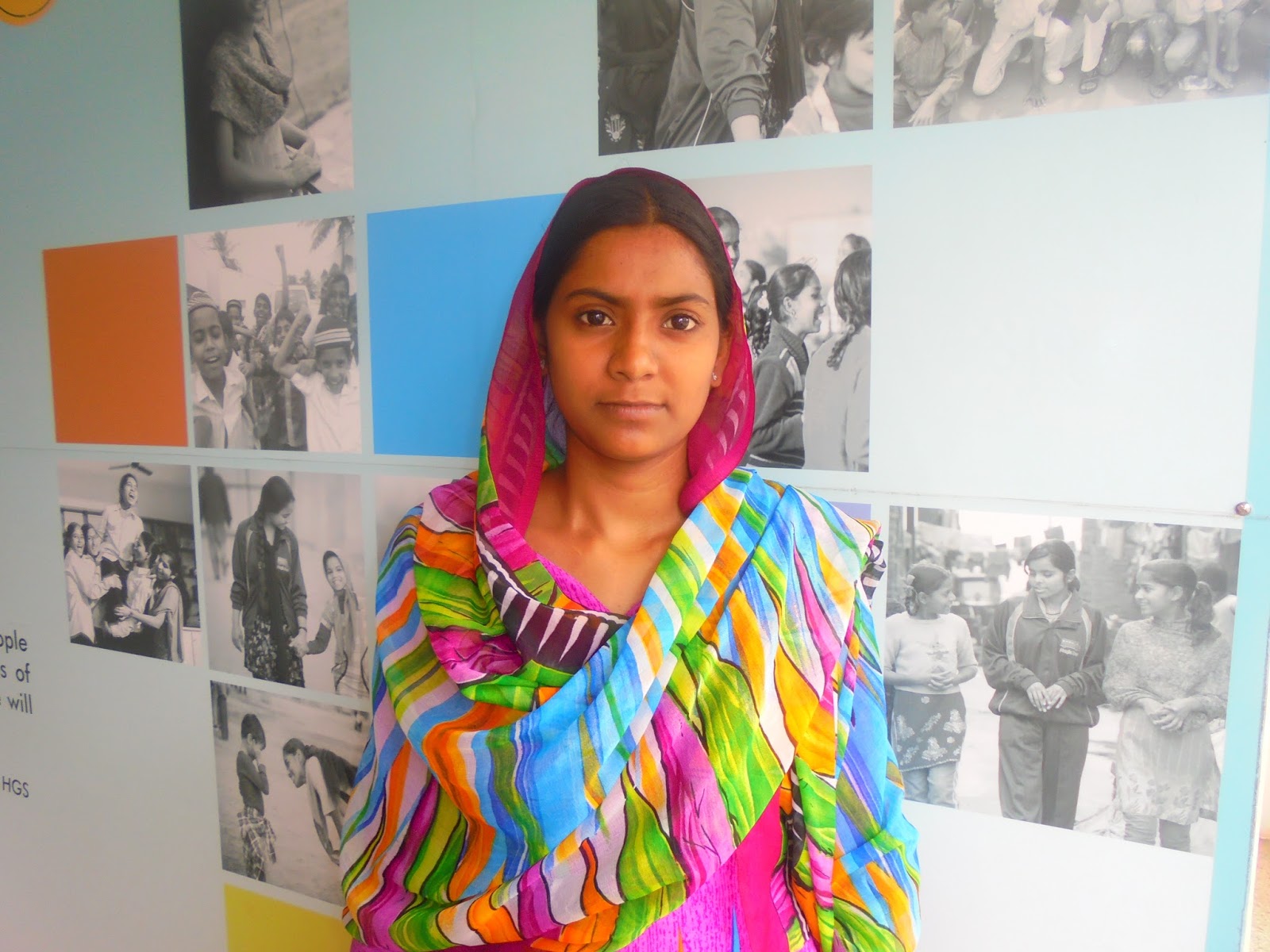
Where there is will: Pooja Kashyap from Bhalswa, Delhi

Pooja started working the day she completed her higher secondary. “I had no option but to earn. The entire family of seven was dependant on my mother. She works as a cook in Nizamuddin.” 


Nizamuddin is at a distance of 27 kms from Bhalaswa, a resettlement colony in north-west Delhi where Pooja lives. “She earns Rs 9000 a month. It is simply not enough to feed a family of seven let alone paying for each of our education. I didn’t want my little siblings to stop going to school. As the eldest daughter, I wanted them to have the basic education I had.” Pooja explains.

On asking what her father did, she takes us back to the days when her family lived in a makeshift settlement (locally known as a ‘juggi’) in Nizamuddin. The family lived the longest there ever since Pooja’s grandparents moved to the city from Uttar Pradesh, in search of work. “I don’t remember my grandparents at all. They passed away when my father was young. When they died, he was in the sixth standard. He quit school and started looking after my grandparent’s vegetable stall in the locality. He married early and continued with the family business till we were asked to leave our home one day,” she narrates. 

A flyover was coming up and residents of Nizamuddin’s squatter colonies were given a piece of land for Rs. 7000 in Bhalaswa. “It looked like an attractive offer at first. To have some land of our own for such a little price. We had some savings to pay from. Father was optimistic that he can continue his business even in Bhalaswa. Just before we left Nizamuddin, father had begun making and selling papad and it was quite a successful venture. He would make the papad in the morning and sell at India Gate in the evenings. Business would pick up during late evenings and he would return home late in the night.”

With the family moving to Bhalaswa, Pooja’s father had to abandon the papad business. The distance was a deterrent.

 “We had no idea of Bhalaswa. Initially, we were just happy to own a piece of land at such a low cost. The conditions were appalling. There was a huge dumping ground nearby, and the entire area was this vast, marshy, land. But we had no place to go back. We were doomed to live here.” Pooja was in the third standard when the family moved to Bhalaswa. 

Although she could barely make sense of the new development in her life, the first thing she acutely missed was a play space. Meanwhile, Her father struggled to find work. He tried running a vegetable stall with his wife’s help. It failed. Their savings ran out. 

The family of eight was on the brink of a serious crisis.This is when her mother started working in Nizamuddin. She would cook in people’s homes and manage to put together some money to feed her children. Frustrated by repeated failures, Pooja’s father took to tobacco and gambling. When Pooja completed her 12th standard, her father left the family and disappeared.


“My elder brother had just finished secondary school. There were no jobs for him. It is here when Santosh bhaiya told me about this vacancy at Magic Bus,” she recalls.

It was not this crisis that brought Pooja to Magic Bus. Their association dates back almost six years ago when Magic Bus began working with children of Bhalaswa. It was a difficult area – a resettlement colony of migrants facing some of the harshest conditions of living. Children were exposed to an unhygienic environment and lack of basic necessities like clean, drinking water and a space to play and learn. As families struggled to make ends meet, children would be pulled out of school and sent to do odd jobs.

“I am grateful to my parents to have never taken me or my siblings off school. We struggled but my mother was very clear never to compromise on our education,” she says. Pooja became one of the earliest girls to be selected as a youth leader in her community.

“Initially, it didn’t mean anything. I thought it to be an opportunity to get out of my home and do something new. I loved teaching children. When I went through the Magic Bus training and curriculum, I was plumbed. There were so many things in it even I didn’t know. I was worried I would never be able to teach children. I was so grateful to have Santosh bhaiya guiding me through the entire process.” For Pooja, her proudest moment as a youth leader was when she would lead a group of girls from a minority community in her neighbourhood who would never be allowed to step out of their homes otherwise. 

“Ask a girl in Bhalaswa what freedom means? They would say, to be able to see the world outside their little homes, to be able to make friends without being asked questions about their character. Magic Bus gave us this sense of freedom. And purpose.” Pooja points out.


Before long, mindsets were shifting at the home front too. “My parents were conservative. While growing up, my sisters and I were not encouraged to interact with people outside our relatives. It was mostly safety that my parents were worried of. After I decided to become a Community Youth Leader and lead a bunch of children, both boys and girls, their reservations gave way. They saw how well-respected I was in the community because of my work,” Pooja explains.

“When I see myself now, I am surprised at how confident I have become,” she breaks into a smile. Four years ago when Pooja got an opportunity to work at Magic Bus, she was thrilled and relieved. 

“Relieved that the family wouldn’t have to go hungry and thrilled because it was Magic Bus – it was like working with people I know and cared for,” she explains. However, she did not get to be the Youth Mentor of Bhalaswa. Instead, she was supposed to take charge of Timarpur, 10 kms away from her community. “I was ready for the challenge,” she says, giving away a certain firmness in her voice, a character she feels guided her through the difficult times in her life.

In the last four years, Pooja has worked with 750 children and mentored more than 27 youth leaders in Timarpur. She has also completed her Bachelors in Social Work and has enrolled in a Masters course with IGNOU. 

She pays for her education and also contributes to the family income. Her father has returned. But few months ago, his right leg had to be amputated because of gangrene. Pooja and her brother Madan, who works as a Centre Coordinator in Magic Bus’ Livelihoods Centre, stood by their mother during this entire phase. They continue to do so.


Pooja plans to build her career as a development professional. “If you have lived the life of an underprivileged, how can you not work for and with them?” her parting answer is an inspiration in itself.

Wednesday, September 28

Choosing to be independent despite odds: Bi Bi Sara Fatima

21-year-old Sara Fatima belongs to Mysore and has been in the city all her life. She lives with her parents, a younger sister and her paternal grandmother in Shanthinagar slum cluster of Mysore. There are 8,843 such slum clusters in her city; she and her family are a part of the 4.24% of the population who live in slums, shorn of the most basic of necessities.

This is Sara Fatima
Sara lives with her family of five in a one-room house, whose monthly rent is three thousand rupees. Most people in her locality work as labourers in garment factories or are vegetable hawkers. Women and children are mostly employed in household businesses of rolling bidis. Although she feels at home here, the colony comes with its own share of problems. “We get drinking water on alternate days in a week, and the supply lasts for not more than three hours.” she says, “In summers, the water shortage is nothing less than a crisis. Lack of electricity adds to our difficulties.” There is no regular process of garbage disposal exposing the locals to a host of diseases.

But Shanthinagar also has its own share of some deep-rooted problems. Women in the community are discouraged from earning their own livelihoods; instead they are married off at an early age. 

“When girls in my community go out and work, it is considered to be a matter of shame,” says Sara, “Although most of them attend school, they are not allowed to study beyond the tenth grade, and are instructed to take up household responsibilities instead.”

Closer home, Sara’s family continues to remain fraught with some long standing issues around health and well-being.

Long before she was born, Sara’s father severely injured his leg in a road accident. He had an intramedullary rod inserted in his leg. Although the doctors instructed him to have it removed a few years later, the family didn’t have enough money to get the surgery done. It now causes him immense knee-pain, so much so, it gets difficult for him to walk at times.

“I hate seeing my father in such unbearable pain,” says Sara, “We are helpless. The government hospitals don’t have the adequate equipment, and we cannot afford expensive surgery.”  His father now paints automotive parts for two-wheelers. But the job is far from regular - he only works when there is a demand for it

Sara's father at work
“On months when there is work he makes Rs. 2000. It is a painful situation to be – we all want him to recover but we don’t have the means to do that or relieve him from working at least,” she explains.
Sara and her family of five survive on a little more than Rs 2000 every month. And, sometimes, when there is no work for her father, even lesser than that.

Her mother is just one among the several beedi workers in their colony. The women are provided with the raw materials, instructed to do the job at their homes and deliver the finished products at a local shop. She earns seven hundred rupees on a monthly basis, all of which is spent on Sara’s sister’s education, who is presently in the ninth grade at a government school. The other somewhat steady income is the money that they receive by availing the government-provided Indira Gandhi National Old Age Pension Scheme, but the entire sum of five hundred rupees is spent on the treatment of her grandmother’s prolonged gastritis.

Sara's mother making beedis
In 2008, Sara had to drop out from school because her family could afford the education of only one daughter. She was merely thirteen years old and in the eighth grade.

“Back then, I wasn’t upset because I didn’t think that quitting my education was a big deal, I had never valued it.” she says, “It took me a couple of years to realize that my life was utterly meaningless. Besides helping my mother with a little household work, I used to be at home all day and do absolutely nothing.”

When Sara turned eighteen in 2013, she decided to bring about a change in her life. With the little savings they had, she registered herself in a 3-year long Urdu diploma course, as she’d always taken a keen interest in the language.  She also pursued two tailoring courses from the Umad Polytechnic Institution, over a span of one year. It cost her seven hundred rupees.

When asked why she didn’t spend the same savings on her education in school instead, she said, “I thought it would be a selfish move. I can always study later, but by opting for the courses I could make use of my skills and contribute to the income of my household at the time. Staying in school would’ve been relatively more expensive.” 

The courses helped her learn the nuances of zarri work and hand embroidery, and she engaged herself in tailoring for the colony needs, earning a little more than a hundred rupees every month.  She also provided Quran tuitions to seven children from neighbouring homes, earning three hundred rupees in the process.

But the turning point in her life came when she joined Magic Bus in November 2015. She learnt about it from her old school. The principal from her school recalled Sara’s economic plight and through her sister reached out to Sara. She promptly came to meet the Magic Bus volunteers. The Magic Bus volunteers convinced her about the importance of getting enrolled in the Livelihoods programme. 

Although her parents were hesitant at first, they eventually gave in. She was given vocational training for three months, which helped better her speaking and writing skills. She was also taught to operate an Urdu software when the volunteers learnt about her fondness for the language. She is now a paid staff member, earning five thousand rupees on a monthly basis.

“The people here treat me with respect and as one of their own.” says Sara, “I am given an opportunity to learn something new every day. It’s like I’ve started my life all over again.” She serves as an office assistant, often writing articles on the Magic Bus workshops, preparing reports and interacting with other volunteers on a daily basis. Even then, her monthly family income barely manages to cross eight thousand, against an average monthly expenditure of ten thousand. It is a constant struggle to afford their basic needs.

But it isn’t like only financial restraints constitute the problems in Sara’s life. “Even though my parents’ attitude towards my job has considerably improved, they’d still rather have me at home,” she says, “Even to this day my parents feel that I should get married and settle down. But I’ve vowed that will never happen until I’ve helped my sister complete her education.”

There is a silver lining. For the first time in her life, Sara feels independent, self-willed, and happy. “Magic Bus has helped me in ways I cannot express. Besides providing me with a steady job, it has helped me overcome my anxiety and become a confident person.” she smiles, “A few months back, I had never even seen a computer for myself; now, I am able to effortlessly work on one, that too daily!”

Even in the face of ongoing struggles, Sara has learnt to never let go of her optimism. She has high aspirations for the future.

“I think people need not give up on their education even after their circumstances might have forced them to do so. I plan to save as much money as I can and take up correspondence courses and complete my education. Furthermore, I want my father to be relieved of his pain, and never want my sister to compromise with her dreams.” she says, “Initially, I wished to be an Urdu teacher. But I now want to continue working with Magic Bus and make a difference in others’ life like they have done for me,” she signs off.

You can help create a better future for the children and youth of this country, Click here to donate.


Tuesday, September 20

Sofya and Reyna’s Magical Birthday

Birthdays come with such joy and happiness – all your loved ones gathered around that scrumptious cake to celebrate you! It also comes with the inevitable question – What gift would you like for your birthday?

Many of us would jump at this question with a long list of items but one of our longest supporters, Kavita Mehta’s daughters’ Sofya and Reyna had a simple and heartwarming answer. They wanted to help children living in extreme poverty get an opportunity to live a better life.


They chose to forego gifts and requested their friends and family to pledge support for Magic Bus through AllButCake instead and helped us raise funds to move children out of poverty.

Their mother Kavita Mehta said, “When we were finalising plans for the girls’ 10th birthday celebrations, the girls were clear that, instead of getting and receiving gifts, many of which would remain unused, they would rather give to an organization that could use the funds to do good. Since we had celebrated their older sister’s 10th birthday at the Magic Bus Centre at Karjat three years earlier, they thought this time we could donate funds to the NGO.”

She also added, “While our donation is only a drop in the bucket, we hope that Magic Bus can use it to extend their fabulous, life-changing programs to reach more young people.”

We are delighted to have been a part of Sofya and Reyna’s birthday. On behalf of our children, we thank Sofya and Reyna.


Inspired by this story? You can pledge your birthday too – Just head to AllButCake. 

Thursday, September 8

Behind the scenes: Julie Foudy Sports Leadership Academy


Bhavna (in the middle) with her friends.


Twelve Magic Bus children travelled all the way to USA to attend the prestigious soccer training by Julie Foudy. “It has been a month since we all came back. And I am still to wake out of the reverie,” says 17-year-old Bhavna of Trilokpuri in east Delhi. For her, it was her first journey outside Trilokpuri. “I haven’t seen much in Delhi except the place I live in,” she says.

Bhavna belongs to a family of five. Her mother was thrown out of her in-laws house because she failed to conceive even a year after her marriage. “She was 15 years old during her marriage. It was because of my grandmother that we got a roof over our head and the inspiration to study. She was the reason my parents never pulled us out of school despite severe economic hardships”. Bhavna’s father is a chauffeur with a salary of Rs. 7000 per month. Her brother had to drop out in the tenth standard to support the family. “He wanted a government job. He drives trucks now.” Bhavna and her two sisters could pursue higher education because of her brother’s sacrifice.

Bhavna joined Magic Bus four years ago. Her Magic Bus mentor encouraged her to pursue her dreams to become a footballer. She also advised her to never let go of education. With her support, Bhavna played as a part of Delhi’s under-19 women’s football team. “I was the only girl in the team from an economically weaker family. I felt lonely. No one wanted to be friends with me. My performance won them over,” she reminisces. At the JFSLA, she no longer felt alienated. “On the contrary, people here were warm and curious about me and my country. I spoke, listened and experienced. I learnt how to communicate with people without fear,” she puts it simply.

Back home, her economic struggles are far from over. Although there are three earning members, the combined income barely puts an end to the regular struggle for basic necessities. She still borrows money from her friends to pay for practice at the Noida stadium. She wants to study but her ambition is to become a footballer. “I want to help street children go back to school. It pains me to see them begging on the street,” she says.

Bhavna’s parting message is an encouraging insight into how young people living in poverty want to change the world around them. 

Monday, July 25

Inspiring a generation of girls in her community: Nazmeen from Delhi


19-year-old Nazmeen lives at Haiderpur in north Delhi.

Her father migrated from Bihar in search of better livelihood opportunities leaving his wife, Nazmeen’s mother, behind. Nazmeen was not even born then. “This is how it happens. Initially, men marry, leave their wives and go to the cities in search of work. They seldom return, consumed by the attractions of a city life and unreasonable working hours,” she explains. 

After three years of her parents’ marriage, Nazmeen’s mother decided to follow her husband to Delhi. She had three children by then. With no source of income and little-to-no support from her husband, it became increasingly inconvenient for her to just depend on relatives.

Her struggles followed her to Delhi where she lived at Anand Parvat slum cluster with her children. Her husband worked as an ice-cream vendor with little to no income. There were days when the family of five would go without food. Yet, Nazmeen’s father would give no more than Rs 500 to support his family. The rest of his income went into alcohol and gambling.


Nazmeen with her parents

On a neighbour’s advice Nazmeen’s mother decided to move to a juggi at Haiderpur with her children. She also started working as a domestic help, earning Rs. 2,500 per month. The family was saved from starvation; but it meant that her elder brothers had to stop going to school and take up daily wage work at construction sites instead.

In her mother’s absence, Nazmeen’s elder sister discontinued schooling and took up domestic responsibilities. At 17, Nazmeen’s eldest sister got married. 

“She is 30 years old now, and has four children. She was pregnant within a year of her marriage, at 18. I could never find out what her dreams could be. I shudder to think of life like hers,” her voice breaks as she recalls her sister who was almost like a mother to her.

Nazmeen got a chance to go to school at the age of six. She would see children in the neighbourhood go to school and plead with her mother to send her to one. Following her footsteps, her younger brother also got enrolled. “I remember both of us went to get enrolled. We were the last ones and the school refused admission. On pleading with them, they said one of us could get enrolled. 

My brother asked me to take the seat. “I will get enrolled in the next year, behen,” he said. I would never forget that moment. It was then that I vowed to make the most of the opportunity I got, ” her voice struggles to remain steady.

Throughout school she worked hard, never forgetting her brother’s sacrifice, her mother’s struggles and her resolve to make the best out of the opportunity she alone had. She never came second in class. “I worked hard. No one forced me to. At home, my mother and elder brothers could only think of putting two meals together. I struggled to learn so that I could put an end to their suffering. When my eldest brother got married, my mother loaned Rs. 2 lakhs to build a brick-and-cement home with two rooms. She worked harder to pay back,” she remembers.

When Nazmeen came home with a glowing report card at the end of each year, there would be no one to share her happiness. Her mother, worn out by financial troubles, would ‘place her hand on her head, utter a blessing and wipe a tear from the corner of her eyes’.

“It would leave me with a biting sense of guilt that I was not supporting her financially. But, I would console myself by saying that a time would come when I would support her better with better pay and working conditions,” she explains.
Nazmeen's mother reflecting upon her daughter's journey.

Nazmeen scored 75 percent in the tenth standard. Her teachers were happy with her performance but she was sad. She knew her family would not support her dream to study further. Her mother confirmed her worst fears. 

“She asked me to learn Urdu and take sewing lessons instead. She was concerned that I did not have any skills to become a suitable bride,” Nazmeen laughs.

She was admitted to a madrasa but couldn’t continue beyond one month. “I was simply not interested. I pleaded with my mother to send me to school. After a lot of fights, she permitted me to study for two more years. I was relieved,” she says.

Nazmeen paid her school fees from a scholarship she had won for her academic achievements in the tenth standard. “I came first in the 11th standard examination and scored 86 percent in the higher secondary examination,” she says, a hint of pride in her voice. However, she knew her mother would not allow her to go to college. But she wanted to make a last desperate attempt to convince her. She requested her mother to accompany her to the school to collect her higher secondary report card. At school, her mother met Nazmeen’s teachers. All of them heaped praises on her daughter’s performance and appealed to her to let Nazmeen study further. But she was not convinced.

“My brothers supported my mother’s decision to not allow me to go to college. They were worried that I would become “too educated” to get any groom," she explains.
Nazmeen soon found a way to go to college. She was aware of Rs. 6000 in her bank account from a government sponsorship (Ladli scheme) for adolescent girls in Delhi. She got herself enrolled in an open learning course (BA in Political Science) in Delhi University. 

“No one in my family knew about it. I wanted to study further. After coming so far, I didn’t want to stop. I chose this course because there would be no regular classes, just one examination in six months. I thought I could make an excuse and give my examination,” she explains. 

However, her little secret was soon out in the open. Her family was going through a financial crisis when her mother asked her to withdraw the money from her account. This is when she confessed that the money was gone; she had used it to get enrolled in a college.

 “My mother was angry and upset. She stopped talking to me. I pleaded with her. I agreed to do all housework if she would allow me to sit for the examination once in six months” she says. After a lot of convincing, she relented.
Nazmeen studies at her house

A year ago, another opportunity came her way. Magic Bus’ programme had just begun in her locality. Pooja, Magic Bus’ Youth Mentor, approached her with an offer: How would she like teaching children the importance of education through activities?

“I loved the idea of Magic Bus. I thought I could make use of my free time and teach children. But my mother refused to allow me to step outside. She was not comfortable with the fact that both boys and girls would come for these sessions and I would be wearing the Magic Bus uniform in front of the entire community,” she explains. 

Pooja, however, succeeded in convincing her mother to send Nazmeen for the sessions. But, on the first day itself, her brother told her that such freedom is not ‘honourable’ for adolescent girls and strictly forbade her from going to the sessions ever again. “I was a Community Youth Leader for a day”, she sighs.

Pooja never lost touch with Nazmeen. She would often visit her and talk to her about her career plans. It was from Pooja that Nazmeen first heard about Magic Bus’ Livelihoods Centre. Pooja convinced her mother to send her for these classes, assuring her that she would be under strict supervision.

Nazmeen started attending the training at Magic Bus’ Livelihoods Centre from November 2015. She started classes on life-skills, computer lessons, and English literacy. The staff helped her plan her career ahead. But Nazmeen seemed to have hit a dead end. She didn’t want to dream any further.

“I was exhausted fighting at home. I knew I wouldn’t be allowed to do a job. I knew they were looking for a groom for me. I shared my problems with the counsellor. I shared my dream to become a teacher one day. She listened to me. She gave me the confidence to negotiate with my mother again. She assured me that she would even come to my house to meet my mother. I have never received such support from anyone in my life,” she shares.

Nothing Nazmeen said could convince her mother to allow her to work. “She told me clearly that our neighbours would start looking down on my brothers if I start working outside. I was crestfallen. I thought my luck had run out,” Nazmeen says. 

The next day, she was surprised to find Magic Bus’ staff at her doorstep. The Centre Coordinator and the Counsellor visited her house, and spoke to her mother and brothers.

 “If it hadn’t been for Mithilesh sir, Avinash sir, and Jayata ma’am, I would have been stuck at home now. All my efforts would have gone in vain,” she says.

In December 2015, Nazmeen got her first job with the HDFC bank for a salary of Rs. 10,000 a month. “I couldn’t believe myself. For the first time, my mother was happier than me. She knew I could support her financially,” she says, adding, “I don’t fault her for being difficult with me all these years. She had never seen any better during her youth. She was my sole confidante all this while. My father was never there for any of us, but she was.”
Nazmeen with her Mother

Nazmeen gives a part of her salary to her mother and saves a small part for a teacher-training course. 

“I haven’t forgotten my dream yet. It is to be a teacher,” her voice sparkles with silent excitement as she looks forward to her dreams with renewed vigour.

Tuesday, June 28

What is it like to be a Magic Bus volunteer?


In all our sessions, one can hear children calling out for "bhaiya" and "didi", their faces beaming with joy. We like to call these young boys and girls Community Youth Leaders, they are volunteers who are trained by Magic Bus to deliver the programme in their own communities.

This photo story, shot by our own staff members, is a window into the life one such volunteer. Lets meet Seenaiah from Chinna Varaval village of Andhra Pradesh.

Seenaiah is one of Magic Bus' 9000 volunteers, delivering the programme to around 400,000 children.

Seenaiah joined Magic Bus as a volunteer in 2011. His village is so remote it gets cut off from the rest if the world every monsoon. He still found the inspiration to become the first post-graduate from his village. His parents Narasayya and Narasamma are proud of his achievement.

Chinna Varaval, where Seenaiah lives, is a small village in the Ranga Reddy district of Andhra Pradesh. There is just one school here, with 200 children in it. Going to college is a big struggle for children and youth living in this remote village.


Over the years, Seenaiah has become one of the most dedicated volunteers in the region.

Seenaiah has become a strong supporter for others in his village who want to study more. Today, his village, Chinna Varaval, boasts of over 30 young graduates who have chosen careers ranging from the Indian Army, the Police Force, to being executive members of Self Help Groups.


At Magic Bus' request, Seenaiah now trains other volunteers on how to be a changemaker.

Monday, May 30

Divya Mahawar: Dreaming of an equal world

“A girl is no less than a boy. We learnt it in a session. Then, why should she not go to school? Why should she get married?” 

12-year-old Divya lives in Shanker Nagar in Jaipur, a hilly area surrounded by the historic forts of Nahargarh and Amber.  Home to Koli Mahawars,a Scheduled Caste (SC) group, Shanker Nagar’s residents are mostly unskilled workers. 

Divya, arriving at her Magic Bus session.
The earliest account of this area is hardly historic or impressive to the tourists drawn to Jaipur’s royal forts and temples. Only the oldest residents like Divya’s grandfather remember the struggle to find work during those days “when most of the area was covered by forest”. Although much has changed about the settlement, the struggle for livelihood continues to underwrite the lives of its dwellers. 

“The forests have receded. Our houses are now made of brick. But, finding a job which brings in enough money to make ends meet is still a distant dream”, says Divya’s grandfather, pausing only to remark about the insignificance of recalling a past which is no different from the present.
For the poor of Shanker Nagar, history isn’t demarcated into eras. Divya belongs to the same Koli Mahawar caste as the rest of the families in Sunder Nagar. Her father is a plumber and mother, a homemaker. The monthly income of the family stands at Rs. 5000.

Divya reads in the sixth standard of a local private school. She has two brothers. One of them goes to school while the other is too young to be enrolled. She lives with her extended family: three uncles, aunts, grandmother, and several cousins.

Her perception of life is influenced by her parents’ constant encouragement to dream of a better future after she completes her higher education. 

“I want to be a doctor. People in my community laugh it off saying I can do no better than my father.  But, I know, I will prove them wrong,” she says.
She joined Magic Bus a year ago. “People living in Shanker Nagar lack gainful livelihood options. Most of the inhabitants work as unskilled labourers just like Divya’s father. Alcoholism is common. Initially, there was no open and safe space for children to come out and play. The area we chose for our sessions was a little away from the community, right at the foothills. We made efforts to ensure that children are safe when they come here”, says Magic Bus’ Neelima who is in charge of the Magic Bus programme in Jaipur.

Her words are echoed by Divya. “Our community used to be unsafe for children because of alcoholics. Once during a Magic Bus session, a man approached a girl in my group to “play with him behind the trees”. Bhaiya and didi (local terms referring to Magic Bus’ Community Youth Leaders) immediately protested. I, too, stood up and asked the man to back off and mind his own business. I did not feel afraid to stand up to a man twice my age. Such incidents are common but we have learnt not to remain silent”.

Divya shares how a girl in her area was sold off by her own uncle so that he could buy alcohol. At a personal front, she has often faced crude jokes for being “dark-skinned”, a quality, her neighbours and children of her age, associated with “difficulties of getting a groom without paying a large dowry”. 

Her dream of being a doctor has been rebuffed by many as an impractical and impossible dream as she was a “daughter of a plumber”.

Such incidents have led her to recognise the unequal treatment meted out to girls and women. It has also helped her find a way to address them through the Magic Bus programme.
“Silence is definitely not the way out”, she says emphatically. “Ever since I joined Magic Bus, I have grown confident of my ability to make it big in this world. With my mentors support, I have stood up to people who tease me about my skin colour or look down upon my dream to become a doctor. I have decided never to discriminate or tolerate discrimination, she shares.
She feels that other children who come for the Magic Bus sessions have changed a lot in the way they behave with each other, particularly towards children of the opposite sex. “Children who would earlier say demeaning things to each other, or behave rudely have changed their ways after coming to the sessions. Children who come to the Magic Bus sessions stay away from alcohol and substances. I have seen many of them encouraging their peers, and sometimes even their parents, to give up on alcohol and other substances”.

She points out the exact reason for her interest in the sessions. “All of us get to learn something new when we come to these sessions instead of sitting at home”. The lessons learnt during the sessions are not quickly forgotten. They are discussed in the peer circles and with parents. Divya’s mother testifies how her daughter is always excited about the “new information” she learns at Magic Bus sessions. 

“She is the leader among the younger children. She makes sure no one misses out a session”, shares her mother.

“A girl is no less than a boy. We learnt it in a session. Then, why should she not go to school? Why should she get married?” she asks. Her parting question tells us much about a 12-year-old’s conception of a gender-equal world.